How a Central Vacuum System Actually Works
Quick Answer: A central vacuum works by mounting a powerful stationary motor in a garage, basement, or utility room and connecting it to a network of PVC tubing hidden inside your walls. When you plug a lightweight hose into a wall inlet, the motor pulls dirt and dust through that tubing to a canister at the power unit, filters the air, and exhausts it away from your living space. Because the motor and the collected debris both stay far from the room you are cleaning, the tool runs quieter in your hand and fine particles are kept out of the air you breathe. Most single-family homes reach every room with two to four inlets and a 30 to 35 foot hose.
On a cold January morning in a Portage ranch home, the furnace has been cycling for weeks and the air feels dry enough to spark off a doorknob. A thin film of dust settles on every windowsill, and dragging a heavy upright from room to room seems to stir as much of it back into the air as it picks up. A central vacuum handles that same chore in a quieter, more contained way. You lift a lightweight hose off a hook, click it into a small port in the wall, and the dust vanishes into a machine sitting two rooms or two floors away that you rarely think about.
That built-in machine is doing a lot of work out of sight, and understanding how the pieces connect makes the whole system easier to plan, use, and maintain. Below is a plain walk-through of what a central vacuum is made of, how the suction actually travels, what the power ratings mean, and where all that dust finally goes.
The Parts That Make Up a Central Vacuum System
A central vacuum, sometimes called a built-in or ducted system, is a semi-permanent fixture installed into the house itself rather than a single appliance you carry. Five main parts do the work.
The power unit
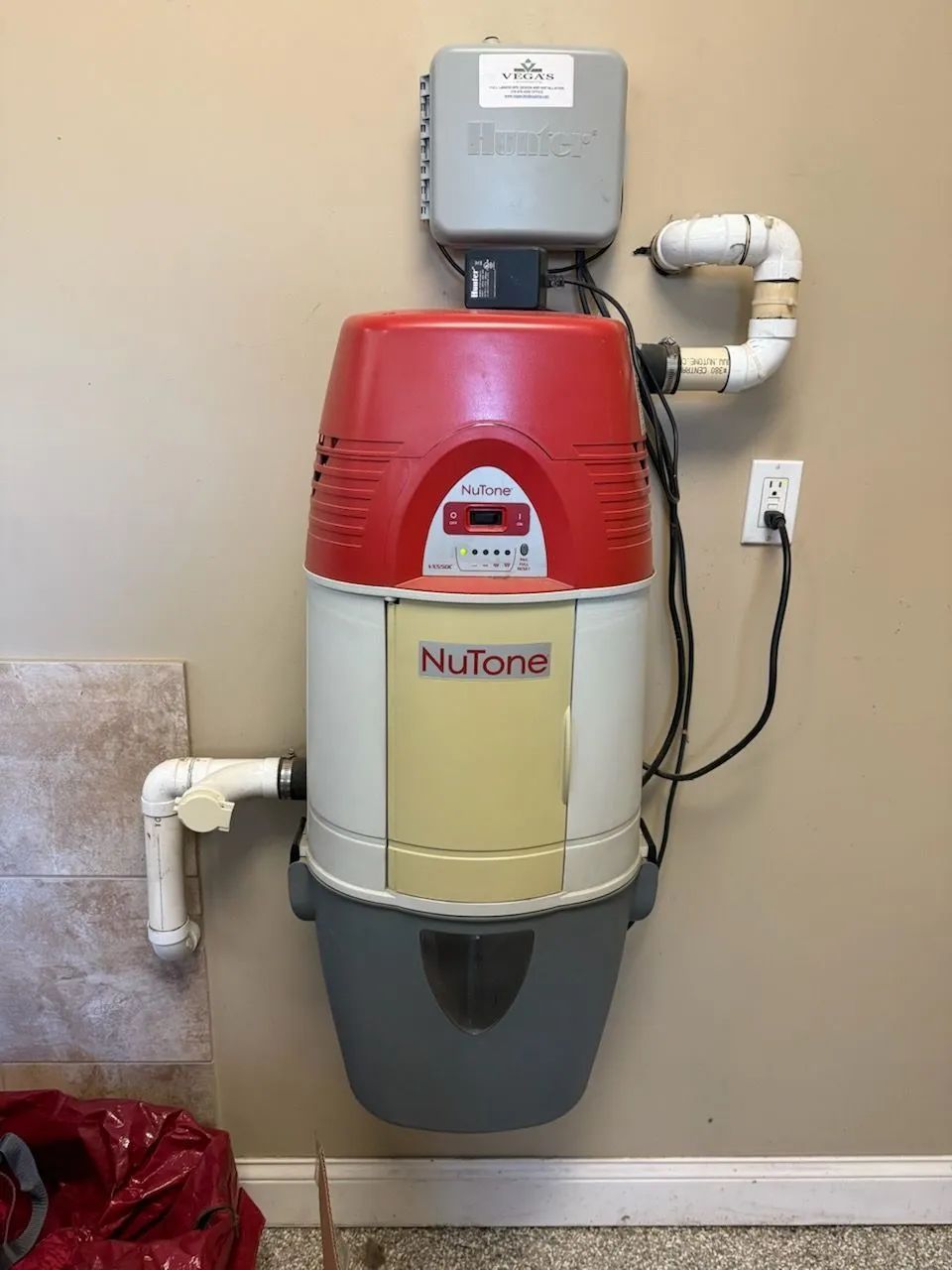
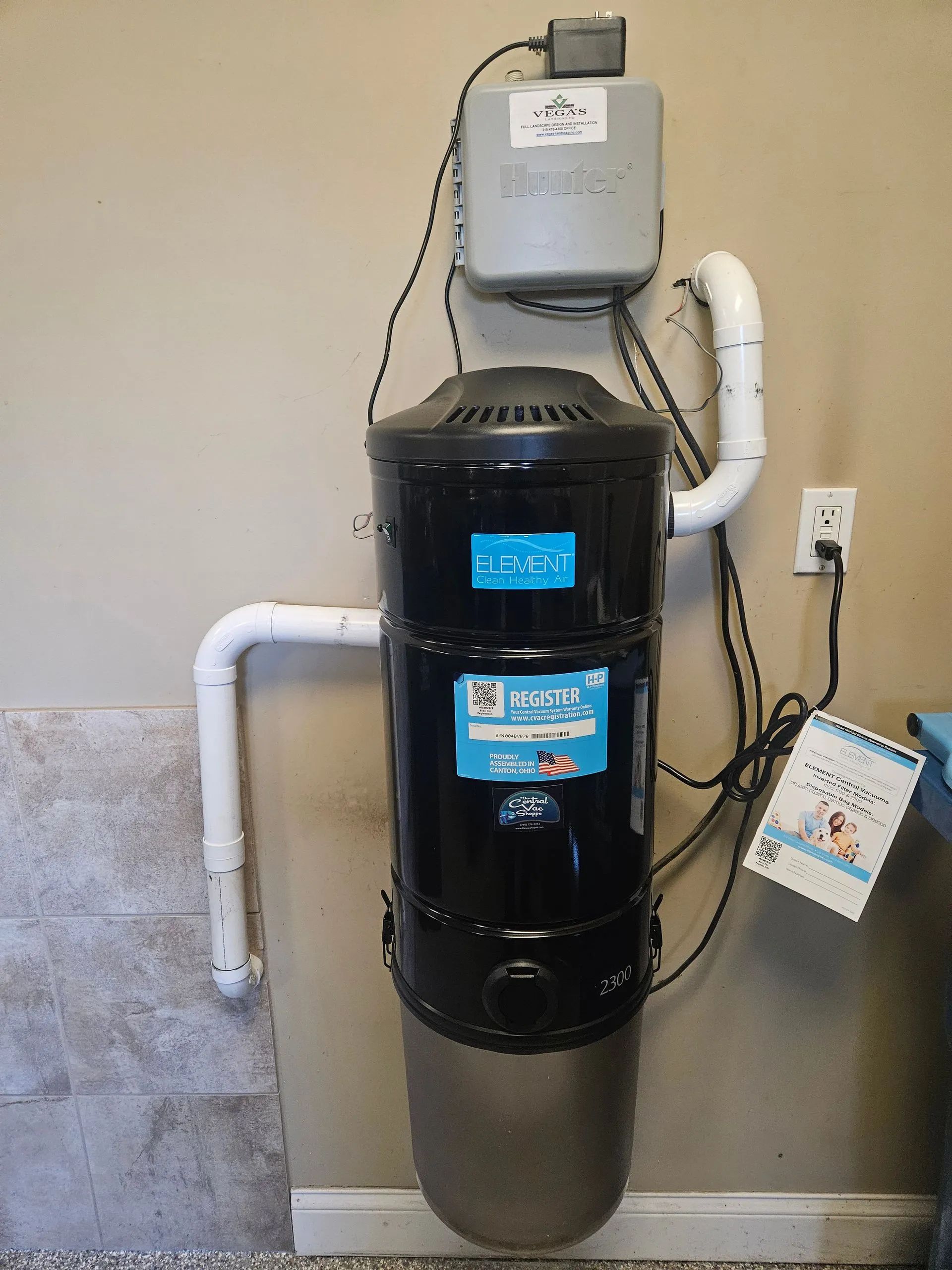
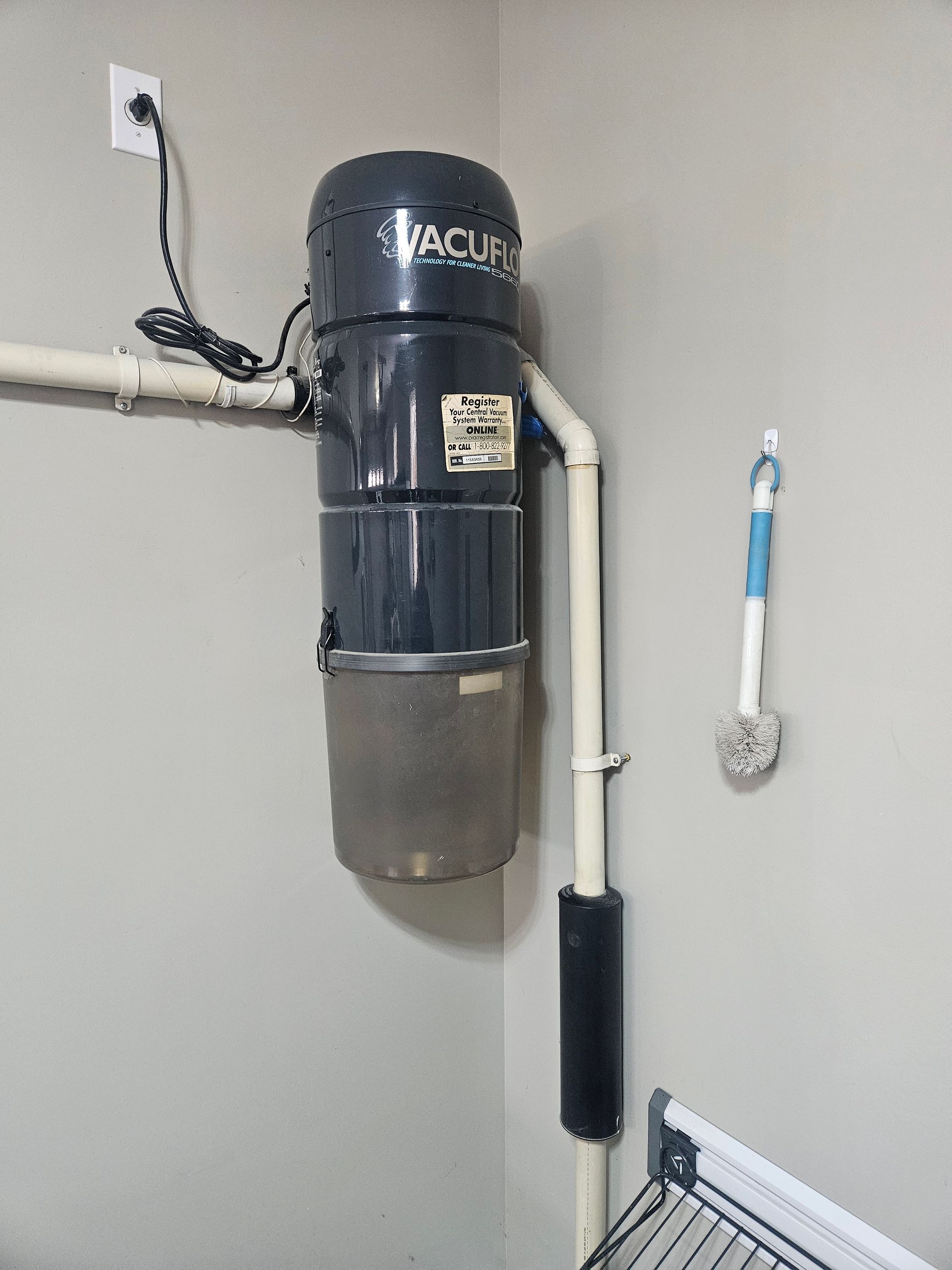
This is the stationary motor and canister, usually mounted in a garage, basement, or utility room. It is the heart of the system and typically produces far stronger suction than a portable vacuum because it is not limited by the weight and size you would have to push around. It stays in one place and runs whenever a hose calls for it.
The in-wall tubing
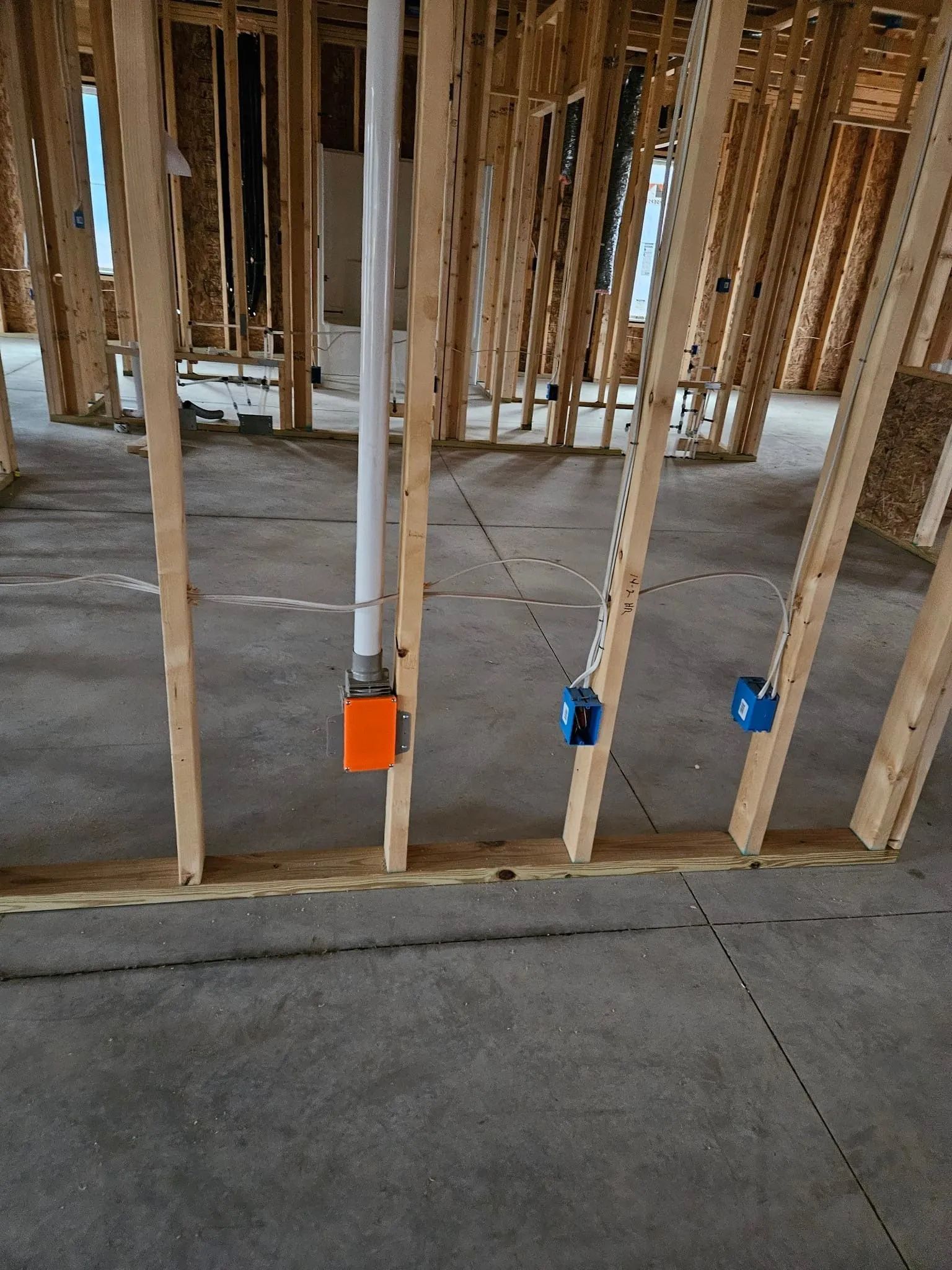
A network of smooth PVC pipe runs through walls, floors, and ceilings, connecting each room back to the power unit. This tubing became the standard for central vacuums after PVC pipe was widely adopted in the early 1960s, which made hidden, low-friction air paths practical inside ordinary homes.
The wall inlets
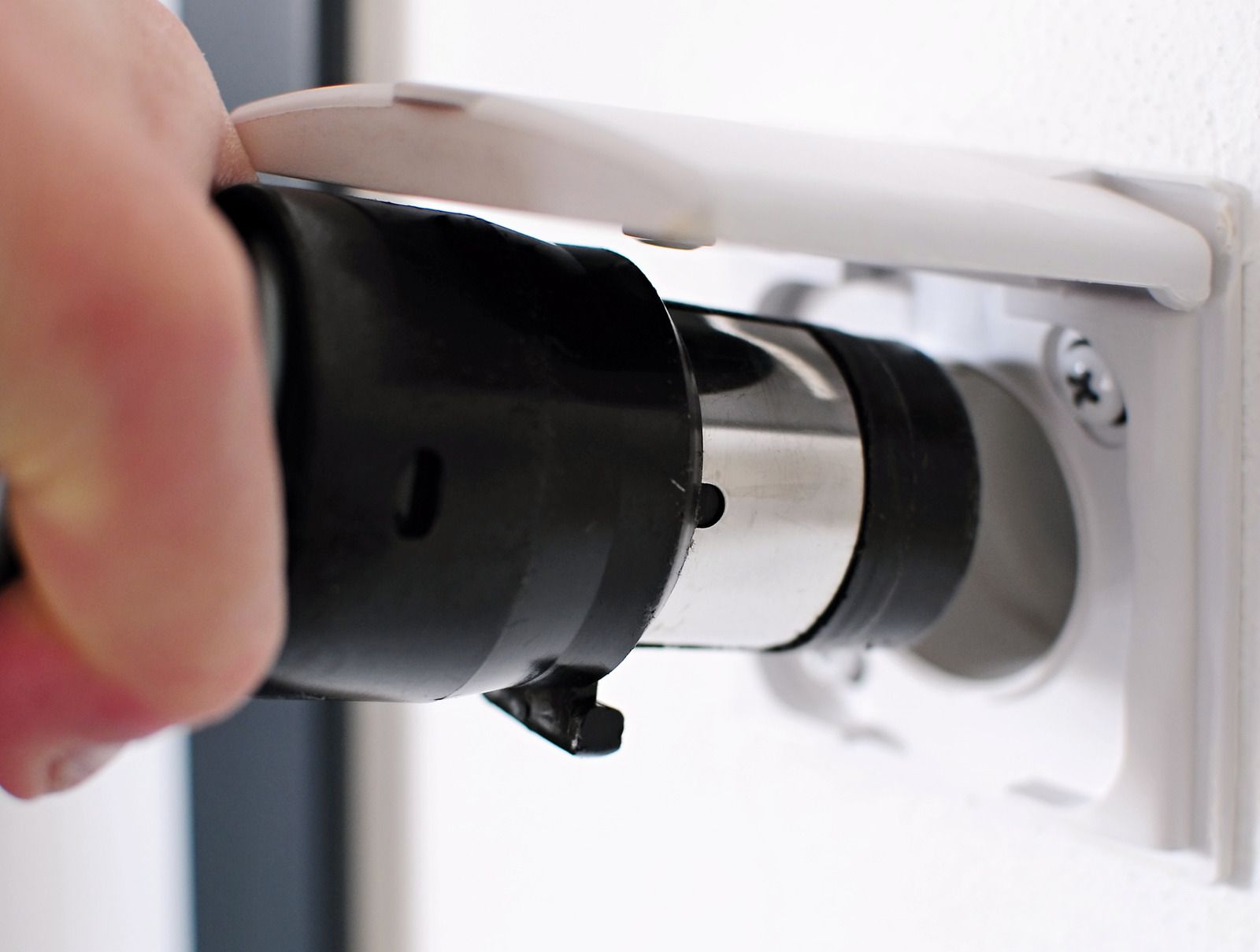
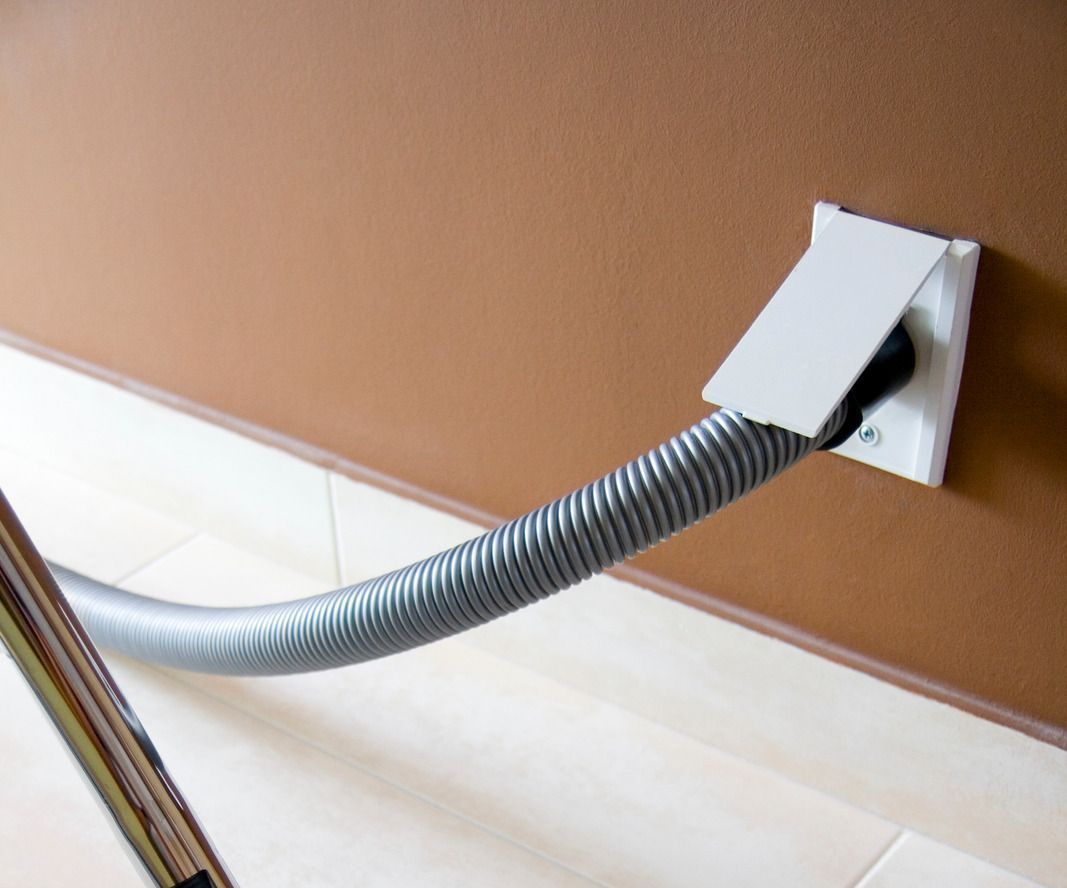
These are the discreet ports you plug the hose into. They sit flush in walls at points chosen so the hose can reach an entire zone of the house. When the inlet cover opens and the hose seats, it connects both to the airflow path and to a signal circuit that wakes the motor.
The hose and tools
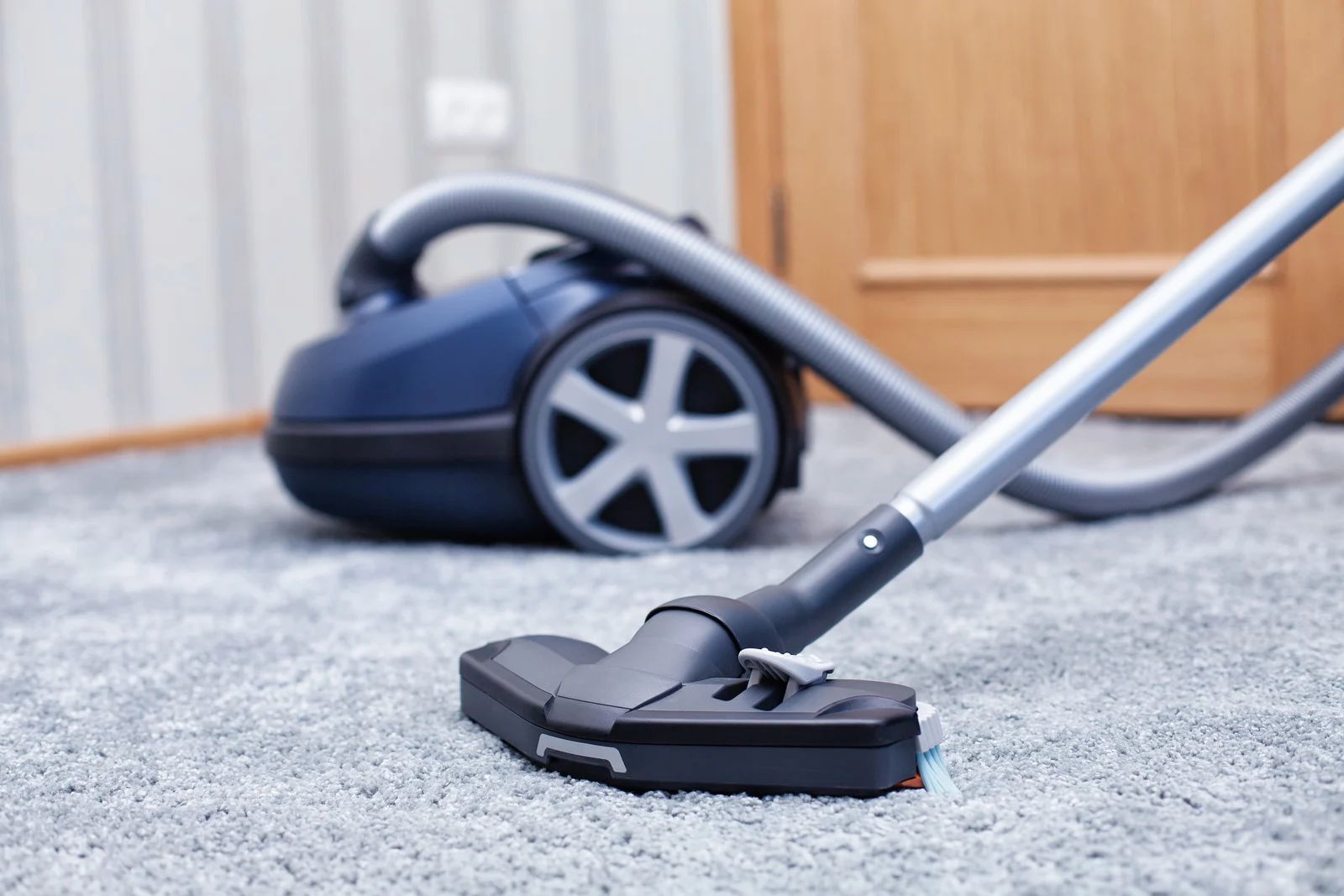
A single lightweight hose, commonly 30, 35, or even 50 feet long, plugs into any inlet. From there you attach floor heads for hard surfaces, motorized power heads for carpet, and specialty tools for upholstery, stairs, corners, and vehicles.
The exhaust and filtration
After dust is separated from the airstream, the cleaned air is either filtered again or vented out of the house entirely, depending on how the unit is set up. This is the part that keeps fine particles from being blown back into the room.
How the Suction Travels From Your Hand to the Canister
Following the air is the easiest way to picture how a central vacuum works, because everything happens along one path.
Activation at the inlet
You insert the hose into a wall inlet while the power unit is powered, and the motor begins pulling air at that point. Suction is now available at the tool in your hand, even though the motor itself is nowhere nearby.
Transport through the tubing
Air carries dirt, pet hair, and grit through the smooth PVC piping toward the power unit. Correct pipe sizing and gentle, sweeping turns matter here, because sharp bends and undersized pipe add friction that weakens suction by the time it reaches a distant inlet.
Separation at the power unit
When the debris-laden air reaches the canister, the heavy material drops out and is captured, while the air keeps moving. A large canister holds far more than a portable vacuum, which is why a central unit needs attention only every few months in most homes rather than after every few rooms.
Clean-air management
The now-separated air passes through filtration or straight out an exhaust line. In many built-in installations the motor's exhaust is routed outside, so the last of the fine dust leaves the house rather than recirculating.
What Actually Powers the Suction
Shopping for or comparing central vacuums brings up three numbers, and knowing what each one measures helps the whole system make sense.
Air watts
This is a combined figure that reflects usable cleaning power at the tool. It is calculated from airflow and water lift together, using a standard formula recognized by ASTM International, and it is not the same as the motor's electrical input in watts. A higher air-watt figure generally means more real cleaning force.
Airflow, measured in CFM
Cubic feet per minute describes how much air the system moves. Airflow is what sweeps loose surface debris, crumbs, and pet hair off floors and into the tubing.
Water lift, or sealed suction
This measures how hard the system can pull when airflow is restricted, such as when a power head is pressed into deep carpet. Water lift is the specification that governs deep-pile cleaning. A well-matched unit balances airflow and water lift against the size of your home and the mix of carpet and hard flooring you have.
TIP: If your home has more deep carpet than hard flooring, pay closer attention to water lift; if it is mostly tile, hardwood, and area rugs, airflow tends to matter more.
How the System Knows to Turn On
One detail surprises a lot of first-time owners. You never walk to the basement to switch the motor on. When you push the hose into an inlet, or flip the switch on many hose handles, two low-voltage electrical contacts inside the inlet are bridged. That closed circuit signals the power unit to start. Pull the hose out and the circuit opens, and the motor shuts down. A thin low-voltage wire running alongside the tubing carries that signal, which is why the whole house can trigger one remote motor without any effort on your part.
Where the Dust Ends Up
Central vacuums separate dirt from air in one of two broad ways, and the difference shapes both maintenance and indoor air.
Filtered and bagged systems
These trap debris in a bag or against a filter inside the canister. The bag holds the fine dust, and you replace it periodically. Filtered designs are forgiving and keep captured dust contained when you service the unit.
Cyclonic systems
A true cyclonic unit spins the incoming air so debris is flung into a collection bin without relying on a bag. Because the dirt drops into a detachable vessel, there is no bag to buy, though you empty the bin instead. In fixed installations, a well-designed cyclonic system can exhaust the cleaned air directly outdoors.
That outdoor-exhaust option is worth understanding for anyone in Michigan. During a long, dry heating season, windows stay shut and the same indoor air circulates for months, so dust, dander, and fine debris have nowhere to go. A portable vacuum with a weak filter can push some of that fine material back into the room through its own exhaust. A central vacuum that vents outside moves the collected dust out of the living space entirely, which is one reason many homeowners in colder climates notice less settled dust on surfaces after switching.
WARNING: Central vacuum tubing is sized for dust, hair, and ordinary household grit. Sending water, wet debris, drywall dust, or fireplace ash into an inlet can pack the tubing or damage the motor, and clearing a packed line usually calls for professional help.
Why Placement and Design Still Matter
A central vacuum only feels effortless when the tubing, inlets, and power unit are planned around the actual house. Most single-family homes are covered by two to four inlets, positioned so a 30 to 35 foot hose reaches every corner of a zone without the user having to move to another port constantly. In a new build across southwest Michigan, that layout can be roughed in before the walls close up, alongside the plumbing and electrical. In an existing home, the tubing is threaded through closets, chases, attics, crawl spaces, and basements, with only small access points that get patched afterward.
The power unit's location gets planned too. Placing it in a garage or basement keeps motor noise out of living areas and leaves room for the exhaust to vent outside. Good design is what separates a system that quietly disappears into the routine from one that leaves you fighting weak suction at the farthest inlet.
Frequently Asked Questions
How is a central vacuum different from a regular portable vacuum?
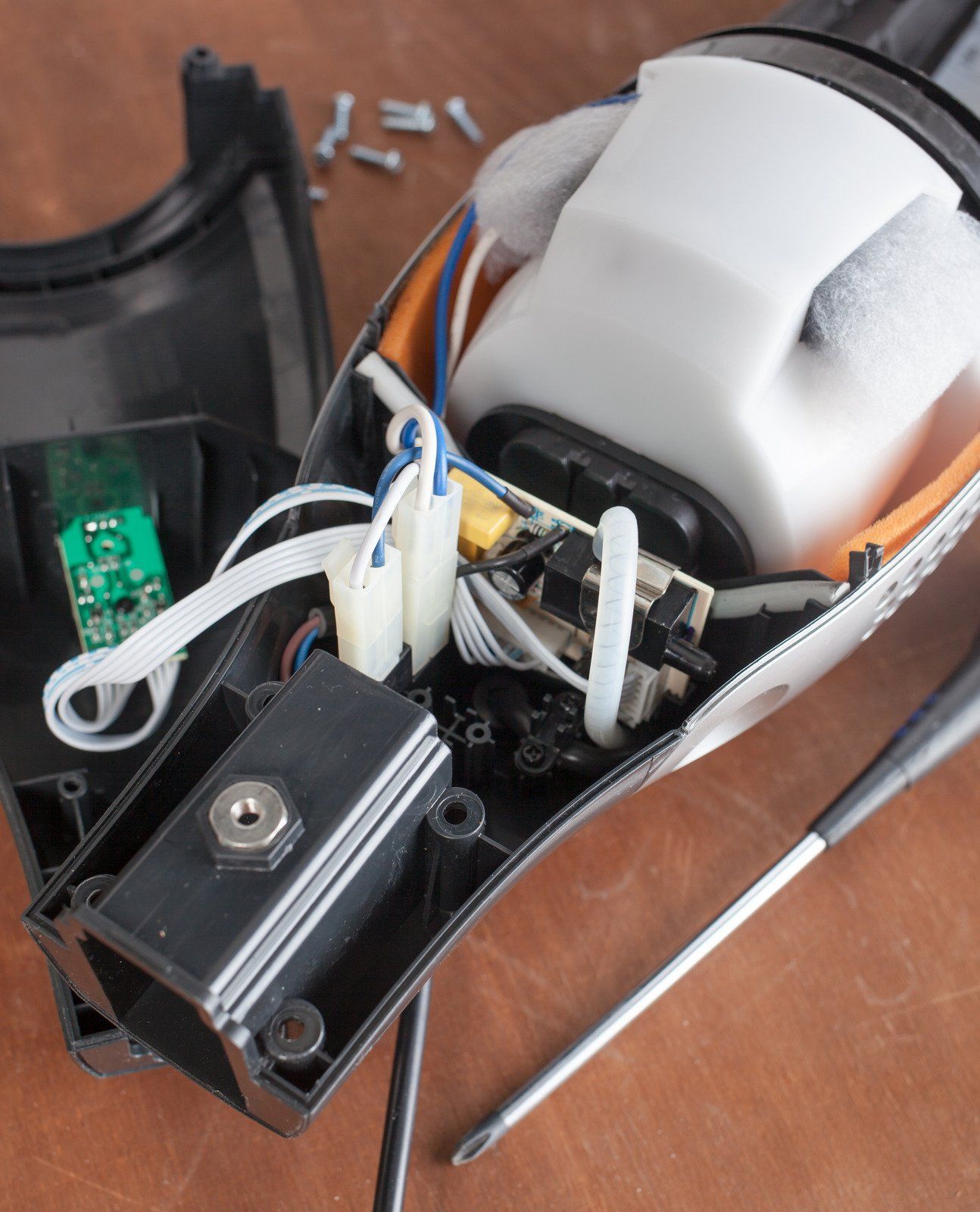
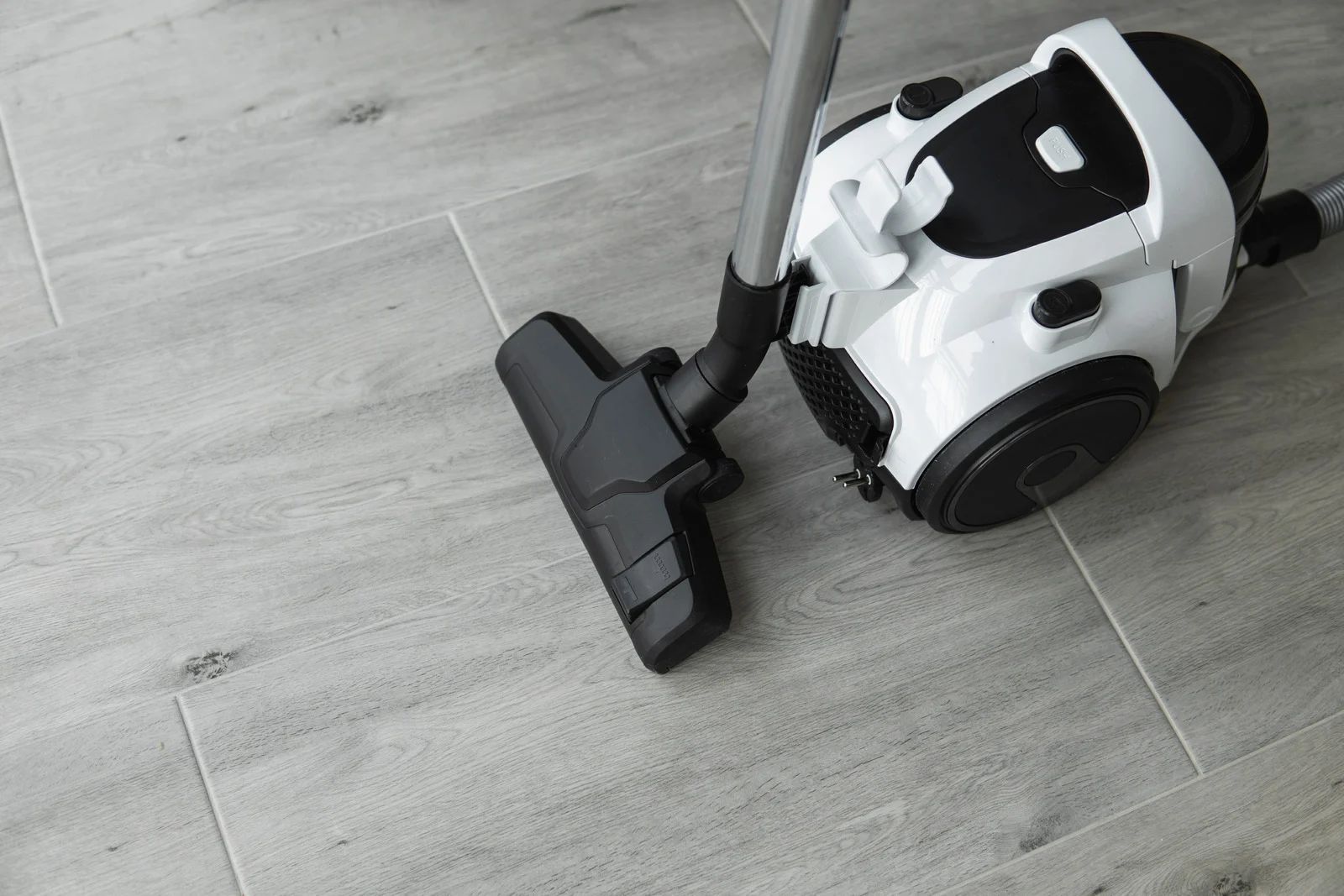
A portable vacuum keeps motor, dirt bin, and exhaust in the unit you push, so noise and dust stay in the room. A central vacuum moves the motor and debris to a remote power unit through in-wall tubing
Where does the power unit for a central vacuum usually go?
The power unit is almost always installed in a space you don't spend time in, such as a garage, basement, or utility room, keeping motor noise away and giving the exhaust a clear path outdoors, if tubing reaches.
How many inlets does a typical home need?
Most single-family homes are fully covered by two to four wall inlets. Installers map the floor plan so a 30 to 35 foot hose reaches every room. Larger homes may need more, compact ranches only a couple.
Do I have to empty a central vacuum very often?
No. Because the canister is much larger than a portable bin, most homeowners empty it or change the bag every couple of months. Heavy foot traffic or shedding pets may need slightly more frequent service and filter checks.
Does a central vacuum really run quieter?
In the room you're cleaning, yes. The loud motor sits in a remote garage, basement, or utility room instead of in your hand. You'll hear air rushing at the tool, but not the motor drone of a portable.
Can a central vacuum be added to a house that is already built?
Yes. Retrofitting is common. Installers route PVC tubing through existing closets, wall chases, attics, and basements, then patch small access points. The finished system looks and performs like one planned into new construction.
What All This Means for Your Home
Strip away the in-wall mystery and a central vacuum is a simple idea done well. A strong, stationary motor pulls air through hidden pipe, dirt drops out into a large canister at the power unit, and the cleaned air is filtered or sent outdoors, all triggered the instant you plug a hose into the wall. The design keeps the noise, the weight, and the fine dust out of the rooms you actually live in, which matters most during the long stretches of the Michigan year when the house stays sealed against the cold. Once you can see how the pieces fit, planning the right unit, inlet count, and tubing route for your own home becomes a far clearer decision.
That clarity is exactly what separates a system that gets used every week from one that ends up gathering dust in the basement. The right power unit size, the number of inlets, and a tubing route that follows the natural shape of your home all depend on details unique to your floor plan, not a one-size-fits-all formula. Based in Galesburg, Michigan, The Central Vac Shoppe
has spent 7
years working through exactly these decisions for homes across southwest and central Michigan, learning which layouts call for extra inlets, where tubing runs are simplest, and how to size a unit so it has real pulling power without being oversized for the space. Understood this way, a central vacuum stops being an abstract in-wall feature and becomes a practical system, one built around how a specific house is laid out and how the people living in it actually clean.